FOB vs CIF Explained: Simple Guide to International Shipping Terms
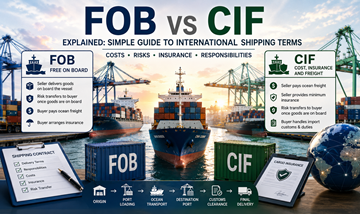
Understanding the difference between FOB and CIF is essential for importers, exporters, freight forwarders, logistics companies, and businesses trading internationally. Choosing the correct shipping term can affect transport costs, insurance coverage, customs procedures, and overall shipment control.
What Are FOB and CIF?
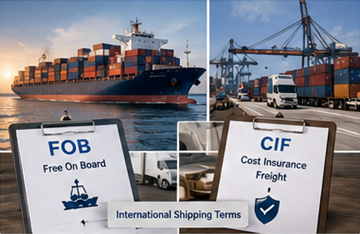
FOB and CIF are international shipping terms used mainly in maritime transport and global trade. Both terms are part of the official Incoterms rules and are commonly used when transporting goods by sea.
These Incoterms define who pays for transport, who arranges insurance, and when the risk transfers from the seller to the buyer during the shipping process.
- FOB = Free On Board
- CIF = Cost, Insurance and Freight
- Both are used mainly for sea freight
- Both define cost and risk responsibilities
- Both are important in international trade contracts
What Does FOB Mean?
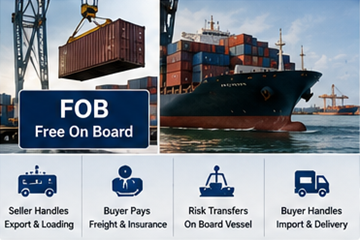
FOB stands for Free On Board. Under FOB shipping terms, the seller is responsible for the goods until they are loaded onto the vessel at the departure port.
Once the cargo is placed onboard the ship, the responsibility and risk transfer to the buyer. From that moment, the buyer becomes responsible for ocean freight, insurance, import procedures, and final delivery.
- Seller handles export procedures
- Seller pays loading costs
- Buyer arranges sea freight
- Buyer arranges insurance
- Risk transfers once cargo is onboard the vessel
What Does CIF Mean?
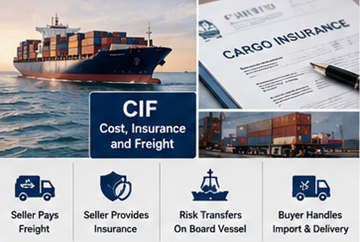
CIF stands for Cost, Insurance and Freight. Under CIF terms, the seller pays for ocean freight and minimum cargo insurance to the destination port.
Although the seller pays transport and insurance costs, the risk still transfers to the buyer once the goods are loaded onto the vessel at the departure port.
- Seller pays ocean freight
- Seller provides minimum insurance coverage
- Seller handles export formalities
- Buyer handles import customs procedures
- Risk transfers at the loading port
Main Difference Between FOB and CIF
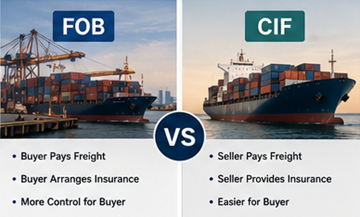
The main difference between FOB and CIF is who pays for freight and insurance during sea transport.
Under FOB, the buyer arranges and pays for sea freight and insurance. Under CIF, the seller arranges and pays for freight and insurance up to the destination port.
- FOB = Buyer controls shipping process
- CIF = Seller organizes transport and insurance
- FOB gives buyer more logistics control
- CIF offers simpler shipping management for buyers
- Both transfer risk once cargo is onboard
Who Pays Shipping Costs Under FOB and CIF?
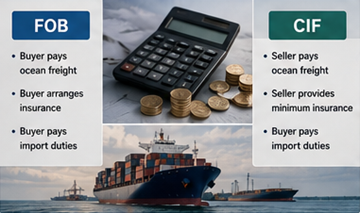
Shipping costs are divided differently depending on the selected Incoterm.
- Under FOB, the buyer pays ocean freight and insurance
- Under CIF, the seller pays ocean freight and minimum insurance
- Both parties may still pay local port or customs fees
- Import duties are usually paid by the buyer
- Final delivery costs depend on the agreement
Even when freight is included under CIF, buyers should verify whether local handling fees, customs costs, or additional delivery charges are excluded.
Risk Transfer in FOB and CIF
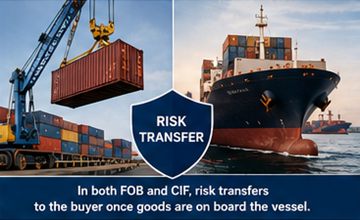
A common misunderstanding is that CIF keeps the risk with the seller during the entire voyage. In reality, both FOB and CIF transfer risk to the buyer once the cargo is loaded onto the vessel.
This means that even under CIF, the buyer carries the shipping risk during sea transport, although insurance coverage is provided by the seller.
- Risk transfers at the loading port
- Cargo onboard = buyer risk
- Insurance helps reduce financial exposure
- Transport damage claims may involve insurers
- Understanding risk transfer is essential in global trade
FOB vs CIF: Which Is Better for Buyers?
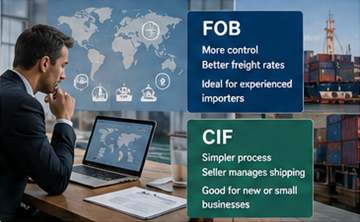
The best option depends on the buyer's logistics experience and shipment requirements.
Experienced importers often prefer FOB because it gives them more control over freight pricing, shipping schedules, and transport providers. Smaller companies or new importers may prefer CIF because the seller manages the transport arrangements.
- FOB offers greater transport control
- CIF simplifies shipping for buyers
- FOB may reduce overall freight costs
- CIF may be easier for inexperienced importers
- Business size and logistics experience matter
FOB vs CIF: Which Is Better for Sellers?
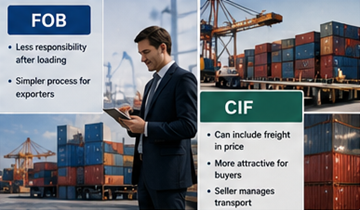
Many exporters prefer CIF because it allows them to organize freight directly and sometimes include transport margins in the total selling price.
FOB may reduce seller responsibility after export loading, making the shipping process simpler for some exporters.
- CIF allows sellers to organize transport
- FOB reduces seller logistics responsibility
- CIF may improve customer convenience
- FOB simplifies exporter obligations
- Seller strategy depends on trade operations
FOB and CIF Insurance Differences
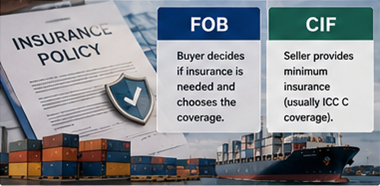
Insurance is one of the biggest differences between FOB and CIF.
Under FOB, the buyer chooses whether to purchase cargo insurance. Under CIF, the seller must provide minimum insurance coverage during sea transport.
- FOB = Buyer decides insurance
- CIF = Seller provides minimum insurance
- Additional insurance may still be required
- Coverage conditions should always be reviewed
- Insurance limits may vary between shipments
Common Mistakes When Using FOB and CIF
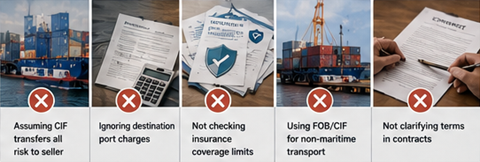
Incorrect use of FOB and CIF can create expensive shipping problems and misunderstandings.
- Assuming CIF transfers all risk to the seller
- Ignoring destination port charges
- Not checking insurance coverage limits
- Using FOB or CIF for non-maritime transport
- Failing to clarify delivery terms in contracts
- Confusing freight costs with total import costs
FOB vs CIF in European Imports
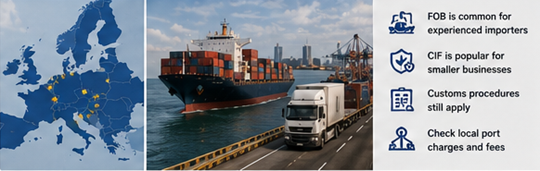
European importers commonly use FOB when they work with freight forwarders or logistics partners that manage international transport.
CIF is often preferred by smaller businesses importing from Asia or overseas suppliers because the transport process is easier to manage.
- FOB is common for experienced importers
- CIF is popular with smaller companies
- European customs procedures still apply
- Port handling costs may vary by country
- Freight forwarders often assist with both terms
How to Choose Between FOB and CIF
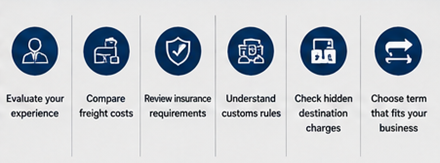
The best Incoterm depends on your experience, shipment volume, freight knowledge, and logistics network.
Companies that regularly import cargo may save money and gain better transport visibility with FOB, while businesses looking for simplicity often choose CIF.
- Consider transport experience
- Analyze freight costs carefully
- Review insurance requirements
- Understand customs procedures
- Compare shipping provider options
- Check hidden destination charges
Conclusion
FOB and CIF are two essential Incoterms in international sea freight and global trade. Although both terms transfer risk at the loading port, they differ significantly in freight and insurance responsibilities.
Understanding these shipping terms helps importers, exporters, freight forwarders, and logistics companies organize shipments more efficiently, reduce misunderstandings, and control transport costs.
FAQ
What is the difference between FOB and CIF?
FOB requires the buyer to pay freight and insurance, while CIF requires the seller to pay freight and minimum insurance to the destination port.
Who pays shipping under FOB?
Under FOB, the buyer usually pays ocean freight, insurance, import duties, and final delivery costs.
Who pays insurance under CIF?
Under CIF, the seller provides minimum cargo insurance during sea transport.
When does risk transfer under FOB and CIF?
In both FOB and CIF, the risk transfers to the buyer once the cargo is loaded onto the vessel at the departure port.
Is CIF safer for buyers?
CIF may feel safer for buyers because the seller arranges transport and insurance, but buyers should still verify insurance coverage and destination costs.
Can FOB and CIF be used for road transport?
No. FOB and CIF are intended mainly for maritime and sea freight transport.
Which is cheaper, FOB or CIF?
FOB may sometimes be cheaper for experienced importers because they can negotiate freight rates directly. CIF may include additional seller margins.
Why do importers prefer FOB?
Many importers prefer FOB because it provides more control over freight providers, transport schedules, and shipping costs.
eXus Dev