What Are Incoterms? Simple Guide to International Shipping Terms
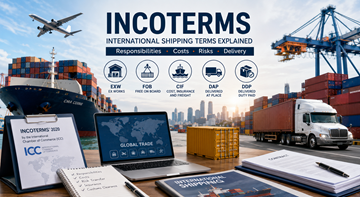
Whether you are shipping goods across Europe or importing products from overseas, understanding Incoterms helps avoid misunderstandings, delays, unexpected costs, and legal disputes. In this guide, we explain the most common Incoterms in a simple and practical way for businesses, carriers, freight forwarders, and private importers.
What Are Incoterms?
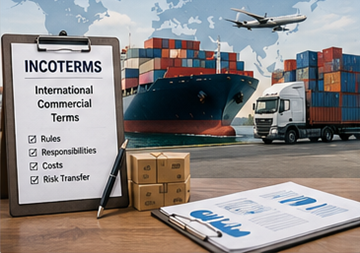
Incoterms stands for International Commercial Terms. They are standardized trade rules created by the International Chamber of Commerce (ICC) to define responsibilities between buyers and sellers in international shipping transactions.
These rules explain who is responsible for transport costs, export formalities, import duties, insurance, cargo handling, and delivery obligations. Incoterms are used worldwide in transport contracts, invoices, shipping agreements, and customs documentation.
- Define delivery responsibilities
- Clarify shipping and transport costs
- Specify customs obligations
- Determine risk transfer points
- Reduce misunderstandings in international trade
- Create standard rules for global logistics
Why Are Incoterms Important?
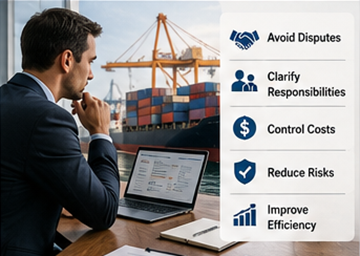
Without Incoterms, international shipments can quickly become complicated. Buyers and sellers may disagree about who should pay transport costs, who handles customs procedures, or who is responsible if cargo is damaged during transport.
Incoterms provide a clear structure for global trade operations. They reduce confusion and help logistics companies, freight forwarders, customs agents, and transport carriers work more efficiently.
- Avoid disputes between trading partners
- Improve transport planning
- Clarify legal responsibilities
- Reduce unexpected transport costs
- Help customs and logistics coordination
- Improve international trade transparency
How Incoterms Work in International Shipping
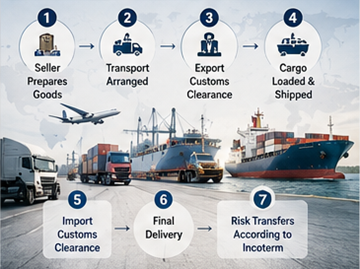
Each Incoterm defines a specific point where responsibility and risk transfer from the seller to the buyer. Depending on the selected rule, the seller may handle only pickup preparation or may organize the complete delivery process including customs clearance and final transport.
For example, under EXW the buyer handles nearly everything after pickup, while under DDP the seller takes almost full responsibility until delivery at the destination.
- Seller prepares goods for shipment
- Transport arrangements are organized
- Export customs procedures are completed
- Cargo is loaded and transported
- Import customs procedures are handled
- Final delivery is completed
- Risk transfers according to the selected Incoterm
Most Common Incoterms Explained
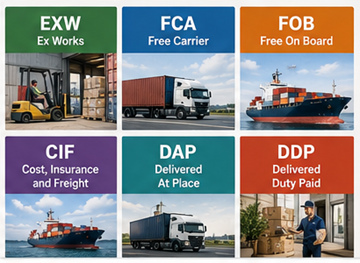
Some Incoterms are used more frequently than others depending on the transport mode and business relationship. Understanding the basics of the most common terms is essential for international shipping.
- EXW (Ex Works)
- FCA (Free Carrier)
- FOB (Free On Board)
- CIF (Cost Insurance and Freight)
- DAP (Delivered At Place)
- DDP (Delivered Duty Paid)
What Is EXW (Ex Works)?
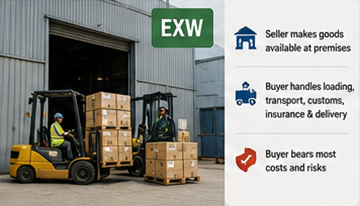
EXW means Ex Works. Under this rule, the seller makes the goods available at their warehouse or premises, and the buyer becomes responsible for almost everything from that point onward.
The buyer arranges loading, export procedures, transport, customs clearance, insurance, and delivery. EXW gives maximum responsibility to the buyer and minimum responsibility to the seller.
- Seller responsibility is minimal
- Buyer controls the transport process
- Common in factory or warehouse pickups
- Buyer carries most risks and costs
What Is FOB (Free On Board)?
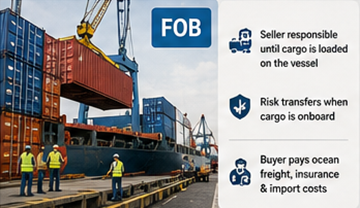
FOB stands for Free On Board and is commonly used in sea freight. The seller is responsible until the cargo is loaded onto the vessel at the departure port.
Once the goods are onboard the ship, the risk transfers to the buyer. The buyer usually pays ocean freight, insurance, import duties, and final delivery costs.
- Used mainly for sea transport
- Seller handles export formalities
- Risk transfers when cargo is onboard
- Buyer arranges sea freight and import process
What Is CIF (Cost Insurance and Freight)?
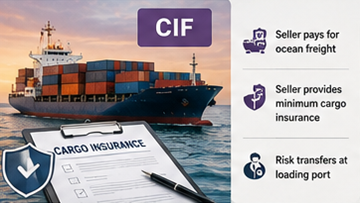
Under CIF, the seller pays for ocean freight and minimum cargo insurance to the destination port. However, the risk still transfers to the buyer once the cargo is loaded onto the ship.
CIF is popular in international sea trade because it simplifies transport arrangements for buyers while still providing insurance coverage during the sea voyage.
- Seller pays freight costs
- Seller provides cargo insurance
- Risk transfers at loading port
- Common in international maritime trade
What Is DAP (Delivered At Place)?
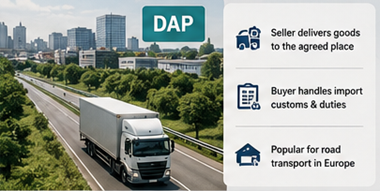
DAP means Delivered At Place. The seller organizes transport to the agreed destination, but the buyer remains responsible for import duties and customs clearance.
This Incoterm is commonly used in European road transport because it offers convenient door-to-door delivery while allowing the buyer to manage local import requirements.
- Seller arranges transport to destination
- Buyer handles import customs
- Popular in European logistics
- Suitable for road freight operations
What Is DDP (Delivered Duty Paid)?
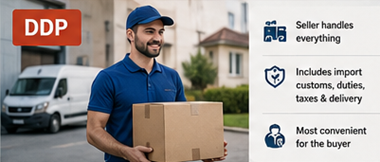
DDP gives the seller maximum responsibility. The seller arranges transport, export clearance, import customs procedures, duties, taxes, and final delivery to the buyer.
For the buyer, DDP is usually the simplest option because almost all logistics responsibilities are handled by the seller.
- Seller handles almost everything
- Import duties are included
- Convenient for buyers
- Common in ecommerce and international trade
Difference Between EXW, FOB, CIF, DAP, and DDP
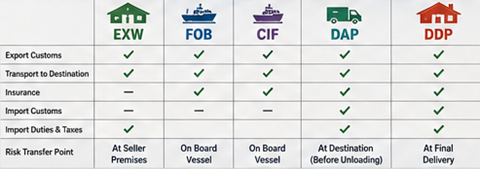
The main difference between Incoterms is the division of responsibility, transport costs, and risk between the buyer and seller.
- EXW = Buyer handles almost everything
- FOB = Seller loads cargo onto vessel
- CIF = Seller pays freight and insurance
- DAP = Seller delivers to destination
- DDP = Seller handles full transport and customs process
Choosing the correct Incoterm depends on transport experience, customs knowledge, shipping routes, risk tolerance, and business agreements between both parties.
Incoterms and Customs Clearance
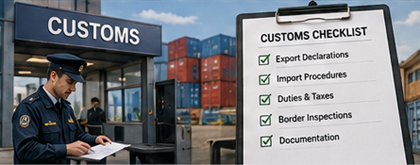
Incoterms strongly affect customs responsibilities. Some terms require the seller to handle export formalities only, while others include import customs clearance and taxes.
Incorrect understanding of customs obligations may lead to delays, border problems, additional fees, or cargo storage costs.
- Export declarations
- Import customs procedures
- VAT and import duties
- Border inspections
- Transport documentation requirements
How to Choose the Right Incoterm
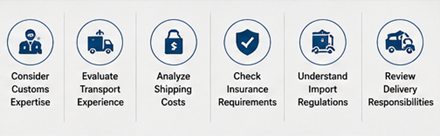
The best Incoterm depends on the shipment type, transport mode, destination country, customs experience, and the relationship between buyer and seller.
Companies with strong logistics experience may prefer EXW or FOB for better transport control, while smaller businesses often choose DAP or DDP for simplicity.
- Consider customs expertise
- Evaluate transport experience
- Analyze shipping costs
- Check insurance requirements
- Understand import regulations
- Review delivery responsibilities
Common Mistakes When Using Incoterms
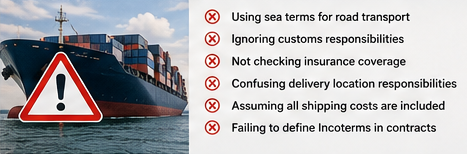
Many shipping problems happen because businesses misunderstand Incoterms or use the wrong trade term for their shipment type.
- Using sea freight terms for road transport
- Ignoring customs responsibilities
- Not checking insurance coverage
- Confusing delivery location responsibilities
- Assuming all shipping costs are included
- Failing to define Incoterms clearly in contracts
Always specify the exact Incoterm version and delivery location in contracts and invoices to avoid confusion.
Conclusion
Incoterms are essential for international trade and transport operations. They define responsibilities, transport costs, customs obligations, and risk transfer between buyers and sellers.
Understanding EXW, FOB, CIF, DAP, DDP, and other Incoterms helps businesses reduce logistics risks, improve communication, and organize international shipments more efficiently.
FAQ
What are Incoterms used for?
Incoterms are used to define shipping responsibilities, transport costs, customs obligations, and risk transfer between buyers and sellers in international trade.
Who created Incoterms?
Incoterms were created by the International Chamber of Commerce (ICC) to standardize international trade rules worldwide.
What is the most commonly used Incoterm?
DAP, FOB, EXW, and DDP are among the most commonly used Incoterms in international logistics and European transport.
What is the difference between DAP and DDP?
Under DAP, the buyer handles import duties and customs clearance. Under DDP, the seller handles almost everything including import duties and taxes.
Which Incoterm gives the seller the most responsibility?
DDP gives the seller the highest level of responsibility because the seller manages transport, customs, duties, and final delivery.
Which Incoterm gives the buyer the most responsibility?
EXW gives the buyer the most responsibility because the buyer manages nearly the entire transport and customs process.
Are Incoterms legally binding?
Incoterms become legally binding when they are included in contracts, invoices, or shipping agreements between parties.
Can Incoterms be used for road transport?
Yes. Terms like DAP, DDP, FCA, and EXW are commonly used for European road transport and international trucking operations.
eXus Dev