Road Freight Transport Abbreviations in Europe (FTL, LTL, CMR, TIR)
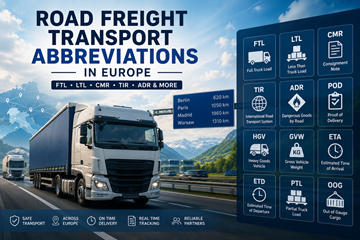
In this guide, we explain the most important road freight transport abbreviations used throughout Europe, including ADR dangerous goods terms, trucking abbreviations, dispatch terms, freight documentation, and international logistics acronyms.
What Are Road Freight Transport Abbreviations?

Road freight abbreviations are shortened logistics terms used in trucking, dispatching, warehousing, customs operations, and international cargo transport. These abbreviations appear in transport software, CMR documents, invoices, warehouse systems, GPS tracking, and communication between drivers and dispatchers.
- Used in international road freight transport
- Important for dispatch communication
- Visible in logistics software
- Common on transport documents
- Used across Europe daily
- Simplify shipment coordination
FTL, LTL and PTL Transport Abbreviations
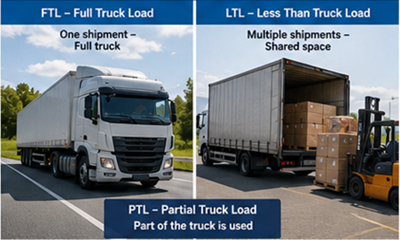
Shipment type abbreviations are among the most commonly used terms in road freight logistics.
- FTL — Full Truck Load
- LTL — Less Than Truck Load
- PTL — Partial Truck Load
- LCL — Less than Container Load
- FCL — Full Container Load
- Groupage — Consolidated cargo shipments
FTL transport usually involves direct delivery for one customer, while LTL and PTL shipments share truck space with cargo from multiple customers.
ADR Dangerous Goods Abbreviations
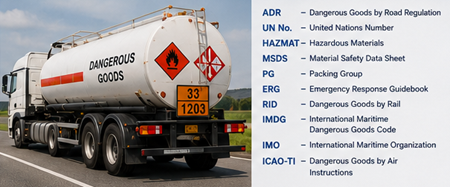
ADR transport involves dangerous goods and hazardous materials that require strict safety procedures, specialized documentation, and trained drivers.
- ADR — Dangerous Goods by Road Regulation
- UN Number — Dangerous Goods Identification Number
- HAZMAT — Hazardous Materials
- MSDS — Material Safety Data Sheet
- PG — Packing Group
- ERG — Emergency Response Guidebook
- RID — Dangerous Goods by Rail
- IMDG — International Maritime Dangerous Goods Code
- IMO — International Maritime Organization
- ICAO-TI — Dangerous Goods by Air Instructions
ADR abbreviations are essential for dangerous goods transport, customs inspections, safety checks, and emergency response procedures.
CMR and Transport Documentation Terms
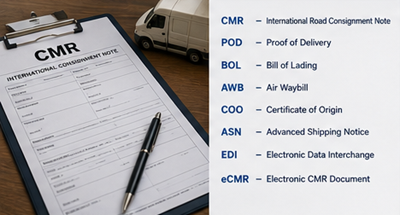
Road freight transport relies heavily on documentation abbreviations related to shipment contracts, delivery confirmation, and freight operations.
- CMR — International Road Consignment Note
- POD — Proof of Delivery
- BOL — Bill of Lading
- AWB — Air Waybill
- COO — Certificate of Origin
- ASN — Advanced Shipping Notice
- EDI — Electronic Data Interchange
- eCMR — Electronic CMR Document
CMR documents are widely used across Europe for cross-border road freight transport and contain shipment details, sender information, and delivery instructions.
TIR and Customs Transit Abbreviations
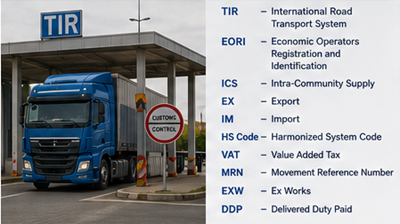
International road freight transport uses many customs and border transit abbreviations for import and export operations.
- TIR — International Road Transport System
- EORI — Economic Operators Registration and Identification
- ICS — Intra-Community Supply
- EX — Export
- IM — Import
- HS Code — Harmonized System Code
- VAT — Value Added Tax
- MRN — Movement Reference Number
- EXW — Ex Works
- DDP — Delivered Duty Paid
These abbreviations are commonly visible on customs declarations, invoices, export paperwork, and international freight documentation.
Truck and Vehicle Transport Abbreviations
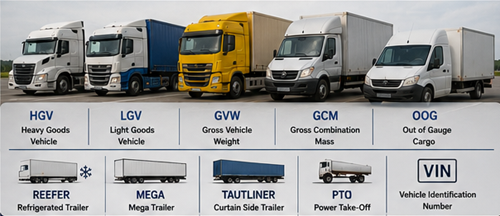
Road freight transport uses abbreviations related to truck categories, weight limits, and vehicle configurations.
- HGV — Heavy Goods Vehicle
- LGV — Light Goods Vehicle
- GVW — Gross Vehicle Weight
- GCM — Gross Combination Mass
- OOG — Out of Gauge Cargo
- REEFER — Refrigerated Trailer
- MEGA — Mega Trailer
- TAUTLINER — Curtain Side Trailer
- PTO — Power Take-Off
- VIN — Vehicle Identification Number
Vehicle abbreviations help logistics companies manage fleet operations, transport planning, and compliance with European transport regulations.
Dispatch and Shipment Tracking Abbreviations
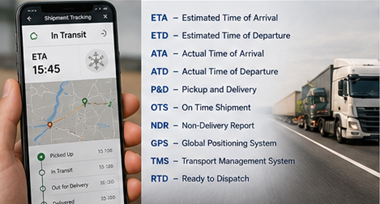
Dispatchers and logistics coordinators use shipment tracking abbreviations constantly during transport operations.
- ETA — Estimated Time of Arrival
- ETD — Estimated Time of Departure
- ATA — Actual Time of Arrival
- ATD — Actual Time of Departure
- P&D — Pickup and Delivery
- OTS — On Time Shipment
- NDR — Non-Delivery Report
- GPS — Global Positioning System
- TMS — Transport Management System
- RTD — Ready to Dispatch
These abbreviations appear in transport software, customer tracking systems, mobile logistics apps, and dispatcher communication platforms.
How Road Freight Transport Works in Europe
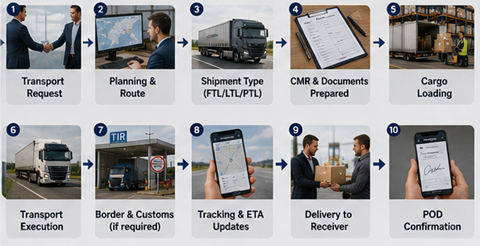
Road freight logistics involves multiple stages from order creation to final cargo delivery.
- Customer creates transport request
- Dispatcher plans route and vehicle
- FTL, PTL or LTL shipment type is selected
- CMR and shipment documents are prepared
- Cargo is loaded onto truck or trailer
- Driver executes transport route
- Border and customs procedures are completed if necessary
- Shipment tracking updates ETA and delivery statuses
- Cargo is delivered to receiver
- POD delivery confirmation is completed
Conclusion
Road freight transport abbreviations are essential for modern European logistics operations. Terms such as ADR, CMR, FTL, LTL, TIR, POD, ETA, and HGV simplify communication between carriers, dispatchers, customers, warehouses, and drivers.
Understanding these abbreviations helps logistics professionals operate more efficiently, reduce misunderstandings, and improve international transport coordination.
FAQ
What does FTL mean in road freight transport?
FTL means Full Truck Load where one shipment occupies the entire truck or trailer.
What is LTL transport?
LTL means Less Than Truck Load where multiple shipments share cargo space inside one truck.
What does ADR mean in transport?
ADR refers to European regulations for transporting dangerous goods by road.
What is a CMR document?
CMR is the international road freight transport document used for cross-border cargo shipments in Europe.
What does TIR mean?
TIR is an international customs transit system used for simplified cross-border freight transport.
What does POD mean in logistics?
POD stands for Proof of Delivery and confirms successful shipment delivery.
What is HGV in transport?
HGV means Heavy Goods Vehicle and refers to large freight trucks used in logistics operations.
Why are freight transport abbreviations important?
They simplify communication, improve logistics efficiency, and standardize international transport operations across Europe.
eXus Dev