Exceptional Transport in Europe: Rules, Permits & Heavy Haul Logistics
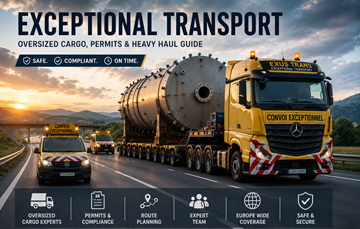
Because these shipments exceed normal transport dimensions or weight limits, they require detailed planning, permits, escort coordination, and specialized transport expertise. In this guide, we focus on how exceptional transport operates across Europe, the logistics challenges involved, and how modern transport companies manage oversized cargo safely and efficiently.
Why Exceptional Transport Is Important in Europe
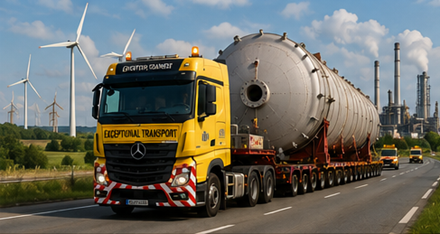
Exceptional transport is essential for modern European industry and infrastructure development. Many industrial components are too large or too heavy for standard freight transport and must be moved using specialized logistics solutions.
Without heavy haul transport, industries such as renewable energy, construction, manufacturing, mining, and infrastructure engineering would struggle to move critical equipment between factories, ports, warehouses, and project sites.
- Infrastructure development projects
- Renewable energy construction
- Industrial manufacturing logistics
- Mining and heavy industry transport
- Bridge and tunnel construction
- Power plant equipment movement
European Regulations for Oversized Transport
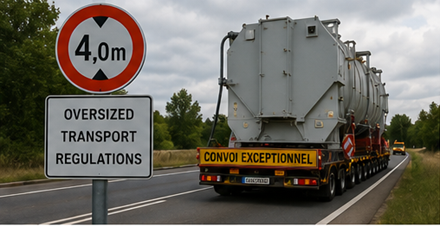
Every European country has its own transport regulations regarding oversized cargo, although many rules are similar across the European Union.
Authorities may restrict oversized transport based on road safety, bridge strength, tunnel clearances, traffic density, weather conditions, or public infrastructure limitations.
- Driving hour restrictions
- Weekend transport limitations
- Night transport permissions
- Bridge load regulations
- Escort requirements
- Road access restrictions
Cross-Border Exceptional Transport Operations
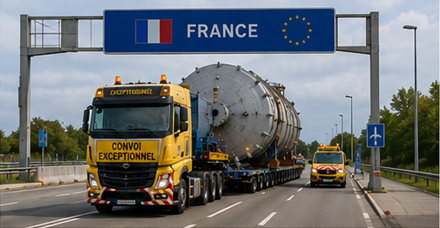
International oversized transport operations are significantly more complex than domestic transport because every country may have different permit systems, escort regulations, and transport limitations.
Heavy haul logistics companies must carefully coordinate routes, border crossings, permits, and schedules before transport begins.
Cross-border transport operations may involve coordination with police authorities, infrastructure operators, customs agencies, and local municipalities.
Challenges of Transporting Oversized Cargo Through Cities
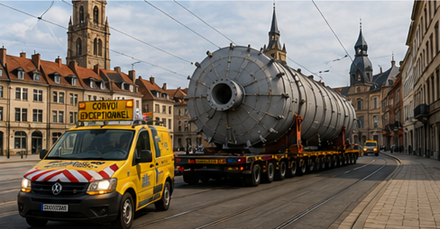
Transporting oversized cargo through urban areas is one of the most difficult parts of heavy haul logistics.
Narrow roads, parked vehicles, roundabouts, low bridges, power lines, and traffic congestion can create major operational challenges for oversized transport convoys.
- Temporary road closures
- Traffic diversion planning
- Removal of street obstacles
- Bridge and tunnel inspections
- Police coordination
- Night transport scheduling
Exceptional Transport for Wind Energy Projects
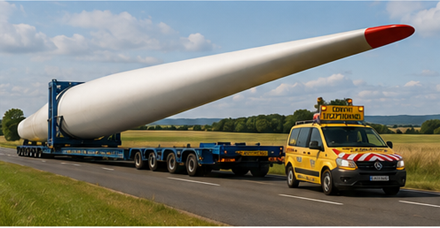
The renewable energy sector has become one of the largest users of exceptional transport services in Europe.
Wind turbine blades, tower sections, nacelles, and generators are extremely large and often require highly specialized trailers and escort operations.
As wind farms continue expanding across Europe, demand for oversized transport logistics continues to increase.
Ports and Industrial Hubs in Heavy Haul Logistics
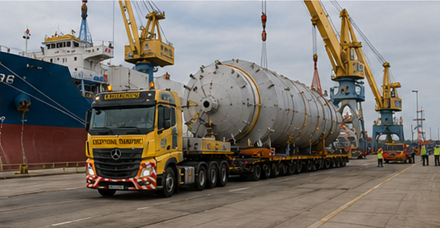
Large industrial ports play an important role in exceptional transport logistics because oversized cargo often arrives by sea before continuing inland by road.
Heavy haul operators frequently transport cargo between ports, industrial zones, factories, and construction sites.
- Port logistics operations
- Industrial cargo handling
- Container terminal coordination
- Heavy equipment loading
- Special crane operations
- Multi-modal logistics planning
Safety Standards in Exceptional Transport
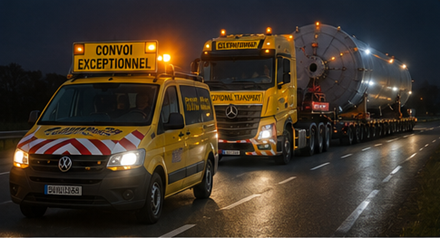
Safety is one of the most important priorities in exceptional transport operations. Oversized cargo can create significant risks for traffic, infrastructure, and transport crews if operations are not properly managed.
Heavy haul companies use escort vehicles, warning systems, route monitoring, safety planning, and specialized driver training to reduce operational risks.
- Escort vehicle coordination
- Warning light systems
- Specialized driver training
- Cargo securing procedures
- Infrastructure monitoring
- Real-time communication systems
Technology and Digital Planning in Heavy Haul Logistics
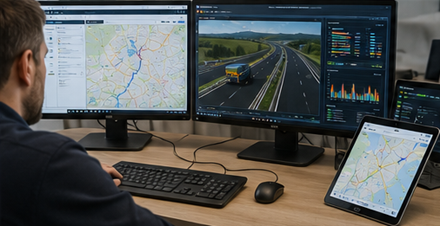
Modern heavy haul logistics increasingly depends on digital technology to improve safety, planning, and operational efficiency.
Transport management systems, GPS tracking, route simulation software, and digital permit coordination tools help companies manage complex oversized transport operations across Europe.
- GPS convoy tracking
- Digital route analysis
- Real-time transport monitoring
- Electronic permit management
- Fleet communication systems
- Logistics optimization software
Future of Exceptional Transport in Europe
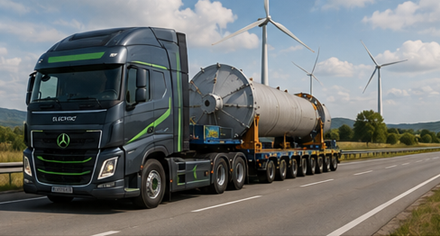
Demand for exceptional transport services is expected to continue growing across Europe due to renewable energy projects, infrastructure expansion, industrial modernization, and increased cross-border trade.
Future heavy haul logistics operations will likely become more digitalized, automated, and environmentally efficient while maintaining strict safety standards.
Conclusion
Exceptional transport remains one of the most complex and specialized areas of the logistics industry. From industrial ports and renewable energy projects to cross-border oversized cargo operations, heavy haul logistics plays a critical role in supporting European infrastructure and industry.
As Europe continues investing in construction, energy, and industrial development, demand for safe and efficient exceptional transport services will continue to increase.
Frequently Asked Questions
Why is exceptional transport important in Europe?
Exceptional transport supports infrastructure, renewable energy, construction, manufacturing, and industrial projects across Europe.
What industries use heavy haul logistics?
Construction, mining, manufacturing, renewable energy, infrastructure engineering, and industrial sectors commonly use exceptional transport services.
Why are ports important for oversized transport?
Large industrial cargo often arrives by sea and is then transported inland using specialized heavy haul logistics operations.
What challenges exist in urban oversized transport?
Narrow roads, low bridges, traffic congestion, power lines, and tight turns can make urban oversized transport operations extremely difficult.
Why is route planning important in heavy haul logistics?
Route planning helps avoid infrastructure limitations and ensures oversized cargo can travel safely and legally.
How does technology improve exceptional transport?
GPS tracking, digital route analysis, transport management software, and real-time monitoring improve efficiency and safety.
What is the future of exceptional transport in Europe?
The sector is expected to grow due to renewable energy expansion, infrastructure projects, industrial development, and increased European logistics demand.
eXus Dev